
Discover Camcevi.

EFFICACY STUDIED IN A PHASE III CLINICAL TRIAL

CAMCEVI was evaluated in an open-label, single arm, multinational study involving 137 patients with advanced prostate cancer with a baseline morning serum testosterone level of >150 ng/dL and ECOG performance status of ≤2.1

CAMCEVI was initially dosed subcutaneously, 42 mg on Day 0 and again at Week 24.1

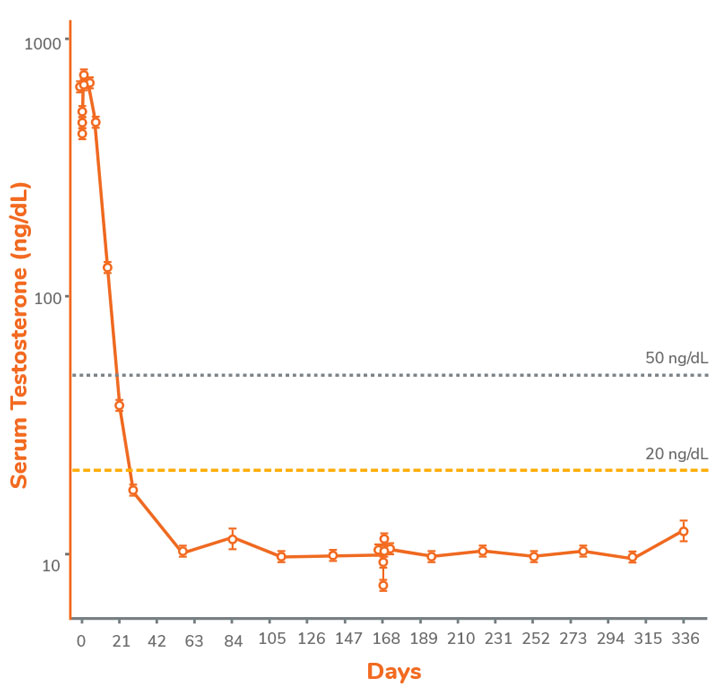
The primary endpoint was medical castration rate, defined as achieving and maintaining serum testosterone suppression to ≤50 ng/dL by Week 4 through Week 48 of treatment after the initial injection.1

50 ng/dL

Serum testosterone by Week 4 through Week 48 of treatment after the initial injection.1

KEY FINDING: EFFECTIVE SUPPRESSION OF TESTOSTERONE TO THE CASTRATION LEVEL

 
Inactive bar-graph

KEY FINDING: EFFECTIVE SUPPRESSION OF TESTOSTERONE TO THE CASTRATION LEVEL
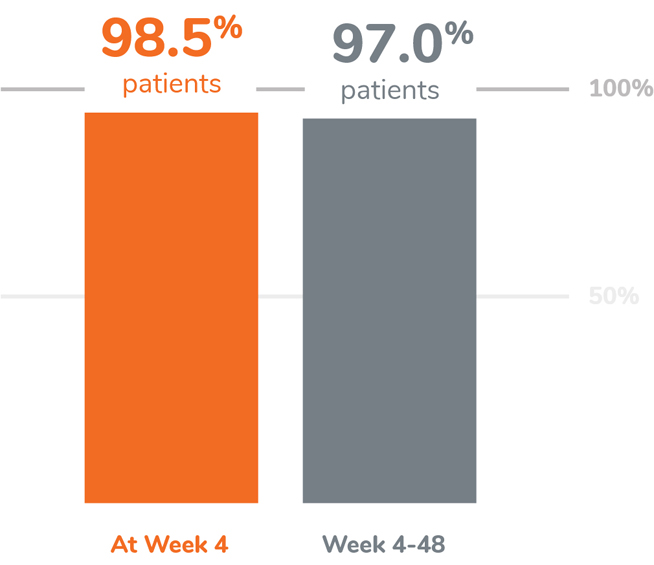

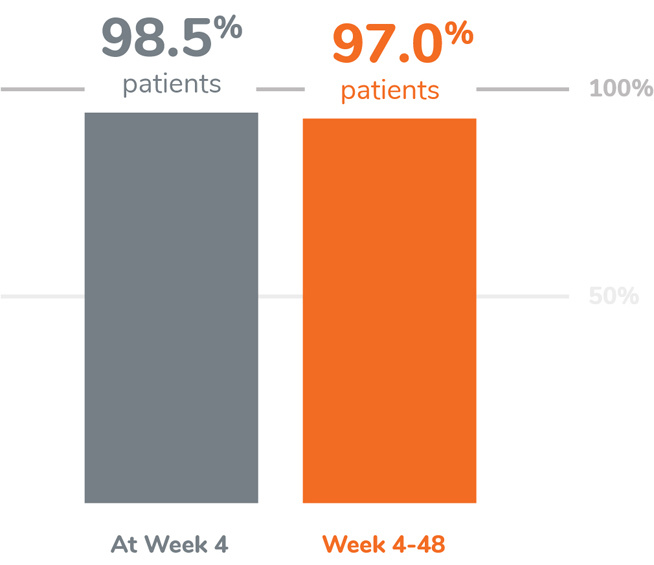
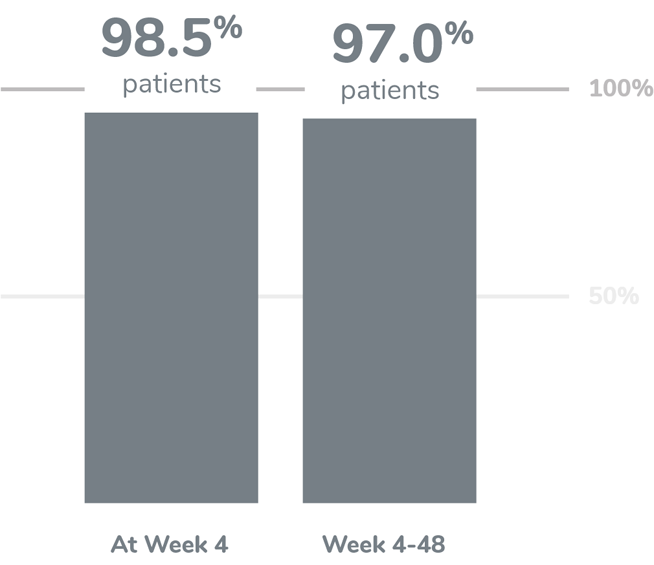
Following the first injection of CAMCEVI, serum testosterone levels were suppressed to ≤50 ng/dL by Week 4 (+/-7 days) in 98.5% of the patients.1

From Week 4 through Week 48, serum testosterone levels were suppressed to ≤50 ng/dL in 97.0% of patients (95% CI: 92.2-98.9) estimated using the Kaplan-Meier method.1

CONSISTENT SUPPRESSION OF TESTOSTERONE
TO CASTRATE LEVELS, AFTER INITIAL DOSE, FROM WEEK 4 TO WEEK 481

Mean Serum Testosterone in the Intention-to-Treat Population2
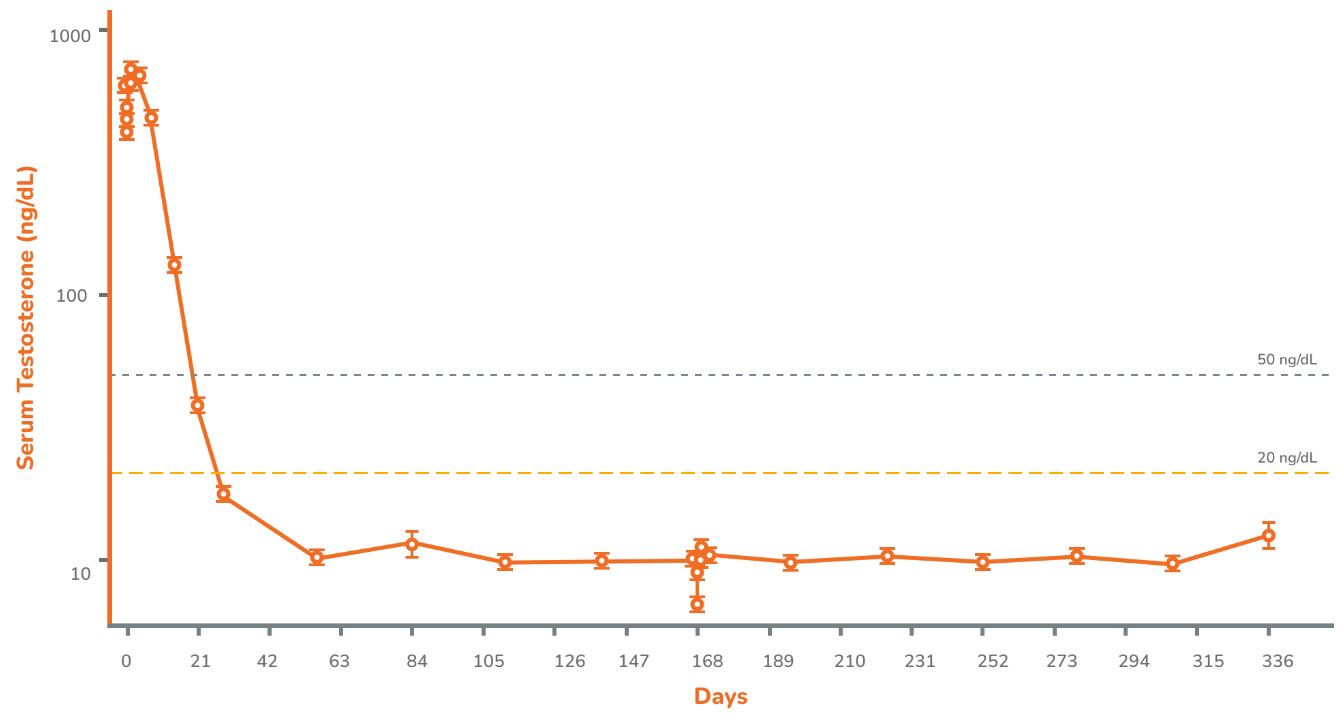
graph graph

These markers were added for clinical clarification and are neither present in the original publication nor Camcevi Product Insert. Refer to the CAMCEVI Label for full prescribing information.

ACHIEVING PROFOUND CASTRATION1

69.3%

of patients with testosterone suppression to ≤20 ng/dL on Day 28.1

SUPPRESSION OF PSA
OVER WEEKS 4-481

PSA levels were monitored and were lowered on average by 51% after 4 weeks after administration of CAMCEVI, 83% after 3 months, and remained suppressed throughout the 48 weeks of treatment.1

These PSA results should be interpreted with caution because of the heterogeneity of the patient population studied. No evidence has shown that the rapidity of PSA decline correlates with clinical benefit.
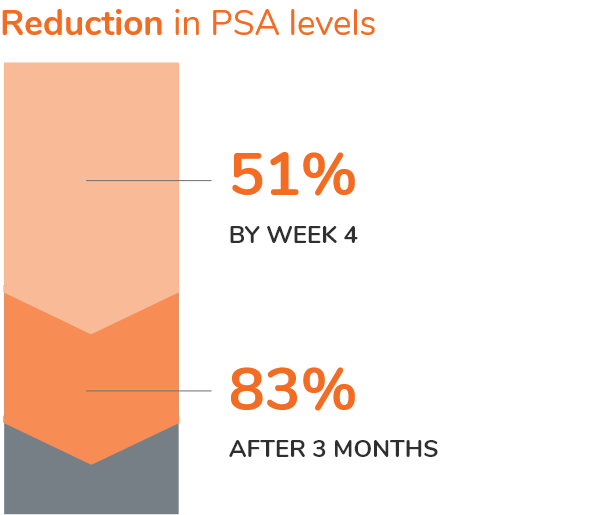
REDUCTION IN PSA

PHARMACOKINETIC CHARACTERISTICS1

Leuprolide concentration is variable, exhibiting an initial rapid increase followed by a rapid decline over the first 3 days before reaching steady concentrations for the duration of the dosing interval.1

Following the first and second doses

Mean serum leuprolide Cmax was 94.5 and 99.0 ng/mL, respectively1

Mean serum concentration was maintained at 0.497-2.57 and 0.507-2.39 ng/mL after Day 31

Mean AUC0-6 mon was
224 and 268 day ng/mL1

SUB-Q ADMINISTRATION WITH ZERO GRADE 3-4 INJECTION-SITE REACTIONS1

CAMCEVI® is delivered subcutaneously and had an injection site reaction rate of just 11%* with no grade 3-4 injection site reactions reported in the efficacy study—allowing patients to focus more on their lives than on their advanced prostate cancer treatment.1

*Includes injection site pain, injection site erythema, injection site hemorrhage, injection site nodule, injection site paraesthesia, injection site pruritus, and injection site warmth.1


See adverse events

Not actual patient.
DOSING
DOSING

DON’T SWEAT SYRINGE PREP

CAMCEVI comes prefilled with no mixing required—simplifying syringe prep for you.1

Don’t sweat
the coverage3,4

*As of 5/5/26.
Coverage is not indicative of utilization
management criteria.

96%

patients covered by

Medicare*

95%

patients covered by

Commercial*

*As of 5/5/26.
Coverage is not indicative of
utilization management criteria.

Don’t sweat YOUR ORDER

Order CAMCEVI through our distribution and GPO partners.

Learn more

HAVE A QUESTION?

Let us simplify it for you.

CONNECT WITH A REPRESENTATIVE

    GET UPDATES

    Stay informed about
    CAMCEVI with regular updates,
    education, and more.

    *Required fields

    IMPORTANT SAFETY INFORMATION

    Do not use CAMCEVI® in patients with hypersensitivity to GnRH, GnRH agonist analogs, or any of the components of CAMCEVI as anaphylactic reactions to these drugs have been reported in the medical literature.

    CAMCEVI, like other GnRH agonists, causes a transient increase in serum levels of testosterone during the first week of treatment which can cause transient worsening of symptoms. As with other GnRH agonists, cases of ureteral obstruction and spinal cord compression have been observed, which may contribute to paralysis with or without fatal complications.

    Patients with metastatic vertebral lesions and/or with urinary tract obstruction should be closely observed during the first few weeks of therapy.

    Hyperglycemia and an increased risk of developing diabetes have been reported in men receiving GnRH agonists. Blood glucose levels should be monitored and managed according to current clinical practice.

    Increased risk of myocardial infarction, sudden cardiac death, and stroke has been reported in association with the use of GnRH agonists. The risk appears low based on the reported odds ratios, and should be evaluated carefully along with cardiovascular risk factors when determining a treatment for patients with prostate cancer. Patients should be monitored for cardiovascular disease and be managed according to current clinical practice.

    Androgen deprivation therapy may prolong the QT/QTc interval. Consider periodic monitoring of electrocardiograms and electrolytes.

    Convulsions have been reported in patients receiving GnRH agonists, like CAMCEVI. Patients experiencing convulsions should be managed according to the current clinical practice.

    CAMCEVI can cause severe cutaneous adverse reactions (SCARs), including Stevens-Johnson syndrome/toxic epidermal necrolysis, drug reaction with eosinophilia and systemic symptoms (DRESS), and acute generalized exanthematous pustulosis (AGEP). Interrupt CAMCEVI if signs or symptoms of SCARs develop. Permanently discontinue if SCARs are confirmed.

    Monitor serum levels of testosterone following injection of CAMCEVI.

    Based on findings in animal studies and mechanism of action, CAMCEVI may cause fetal harm when administered to pregnant women.

    The most common (≥10%) adverse reactions during a median follow-up of 336 days were hot flush, hypertension, injection site reactions, upper respiratory tract infections, musculoskeletal pain, fatigue, and pain in extremity.

    INDICATION

    CAMCEVI is indicated for the treatment of adult patients with advanced prostate cancer.

    Click here for full Prescribing Information.

    Back to TopBack to Top button

    References:

    1. CAMCEVI. Prescribing information. Accord BioPharma. 2. Shore N, Mincik I, DeGuenther M, et al. World J Urol. 2020;38(1):111-119. 3. Data on file. Accord BioPharma; 2023. 4. Data on file. Accord BioPharma; 2023.

    Back to TopBack to Top button